Weeknote 7th Jan 2024 – End of One Era…

Goodbye old friend, we’ve been through a lot.

So, something of a quiet week work-wise, as I’m not actually employed right now. This was thrust into sharp relief when a courier came the the house on Monday to take away my partner-in-crime for the last eleven months.

In many ways losing this laptop felt much stranger than other job changes because it was very much “and there goes government”, something I’ve been used to being inside and connected to for a very long time. I’m sure there are virtually-public documents I’ll rue not copying, or contacts I’ll curse myself for not adding to a personal phone, not to mention folks I will miss being able to badger on the cross-government slack at a moment’s notice. But it’s definitely time for a change, and the clean break is going to be good for my wellbeing.

To that end, I decided that I was going to give back my ticket to the ukgovcamp unconference later this month. I booked it ages ago, when I was still in “GDS Head of Product Profession” mode. I’m sure I’d have seen loads of old friends there, but I realised it was just a bit too early to be caught up in the inevitable advice-giving and light coaching. Next year, I’m going. And I think I’ll have a lot more fun. I hope that whoever gets my ticket has a total blast.

Traditionally most folks leaving government go on a massive rant about everything they’ve not been able to say for years, due to rules on impartiality. It’s certainly tempting, but so many of the things I’d want to talk about are now playing out in a blatantly obvious fashion, so – well – it’s not going to make much difference…to me or others.

However: folks still within the civil service, I am still going to be there defending you and standing up for the hard choices you have to make in difficult circumstances. I hope you continue to be evidence-guided and hypothesis-driven wherever you can be, despite the pressures. I’ll soon be in a position to provide tea and sympathy once more – but I do need to have this bit of breathing space first. And if I ever start bitching as though I know better when I wasn’t there in the room, please send me a message and I’ll fix things asap.

Also on the leaving front: I’ve continued to have a trickle of lovely messages arrive in the inbox from former colleagues, talking about ways I’d helped them or the blimey-I-didn’t-know-that reason they’d not been able to be part of the rituals of my departure. Thank you all. And if anyone feels like leaving a Recommendation to my LinkedIn profile that would be just lovely. As someone who acts as ‘general organisational glue’ it can be incredibly helpful stuff to reflect on. (I remember that, for one prior big job, I learned more about what I’d actually done for people through those recommendations than almost anything else.)

I’m still getting folks liking, commenting on, and sharing my work on the Product DDaT Framework within social media, which is nice. (I even had one text message that was so kind I might have had a tiny tear in my eye.) Anyway, fingers crossed this means it will continue to have a life once folks are back in the office, despite the pressures of everyone’s day jobs.

New Bug

I start at Which? tomorrow.

I’ve spent a bit of today gathering all my thoughts as an outsider, along with a few things folks said to me about their own impressions of the organisation/offer. I also walked through the process of deciding whether to subscribe, poking around the free offer and walking the payment journey. Because tomorrow I’ll start having loads of context that will erode that outside view, so I want something to be able to refer back to. “This is what you *used* to think, Tom”. And I looked through my Job Description once more.

There’s lots to think about in that collated document – but I also know I’m joining a bunch of smart people, who’ll have considered or tested loads of things already, and have a ton of ideas of their own.

Anyway, preparations. I’ve chosen a new-ish Moleskine notebook for day one. Not completely untouched, but certainly one that isn’t full of existential woes from the last 18 months. I’ve got two brand-new Rotring Tikky pencils, and some fairly fresh fine-point sharpies, and decided not to switch back the Livescribe just yet. So the satchel is completely prepared.

Thankfully I’m travelling light, as there’s a tube strike tomorrow and getting from East London to Regents Park for 9:30 is going to be a bit of a pain. Everyone else comes by overground train, so I’m one of the few affected. But I am also delighted that I’m making the journey in for what sounds like an *incredibly* well-planned induction process. Feeling really heartened by that, and looking forward to getting stuck in.

What else?

There’s been a lot of culture.

First up was going to see the RSC/Improbable production of “My Neighbour Totoro” at the Barbican.

This is the only photo I got to take – as they rightly say everyone should discover the magic for themselves. Suffice to say, it’s absolutely epic – as you’d expect given that the director is more used to putting on productions of Philip Glass operas. The puppetry is designed and built by the Hensons, and just when you think “there’s no possible way they’ll pull off that scene from the film”, somehow they do. There’s genuinely a Totoro on stage. He’s massive. And moves. Even this little blue opening screen contains some playfulness as the evening transforms from a film to a stage show.

Anyway, here’s the trailer:

Yes, the tickets are…not cheap. But you can really see where the money’s gone. The girl who plays ‘Mei’ is utterly convincing as an annoying four-year-old. The mum is a much more rounded character, Kanta has a back-story. I actually think it’s…gasp…better than the film. I’m really hoping to see it again before it closes, even if it’s just me on my own. Happy to conspire with other folks who are tempted, though…

Also, inexplicably, in the Barbican Auditorium that night there were a whole bunch of the costumes from the new Emma Stone film “Poor Things”.

They were absolutely *beautiful*. And of course you can’t help but be agog and think “but the real Emma Stone really wore these clothes, you know…like…EMMA STONE!”

We watched the film itself across two nights this week, courtesy of BAFTA shenanigans. It’s a complicated watch, I must say. She is incredible in it – just so detailed in how she portrays a child’s mind in an adult’s body. Visually it’s astounding. Mark Ruffalo is totally charming as a cad and bounder, and having an absolute blast. The hybrid creatures populating her world remind me of that old b3ta.com era website Human Descent in their playfulness. Loads of it is wry and funny. But…it’s also very gruesome, and some other people watching it with me were pretty uncomfortable about whether all the sex in it was completely necessary – or if the shooting style through all the fish-eye lenses veered away from being about viewing her as a science experiment and more into voyeurism. Emma was one of the producers, and has said that she sees the film about being what life would be like for women if they didn’t have shame. I can see the argument for that, but it also does still feel a bit of a “male gaze” film. There’s a lot to admire, and I’m glad I saw it – but I don’t think I want to watch it again and it’s definitely NOT a date film.

Otherwise, it’s been a bit quiet on the film-watching front. “A Haunting in Venice” was good fun and well executed. You kind of know what you’re going to get with Branagh’s outings as Poirot, and it doesn’t disappoint.

I got a bit overwhelmed by “I have a week left to do ALL THE LEISURE” at the start of the week. I wrote down a list of everything that was in my head I *could* be doing, and it filled more than a side of A4. So I just kept halving that list until I found the top few things that really mattered.

  • The tax return is done. Thankfully this year I had a pleasant surprise and found I’d saved enough in advance. Unlike last year when I found out my umbrella company had got their sums wrong and I owed HMRC five grand. Just as I was leaving DIT. But this time I’ve got a few hundred quid spare. For some definitions of “spare”.
  • I started making a dent in Dave Martin and Andrea Saez’s “Product Momentum Gap”, which has been by the side of the bed for ages.
  • Similarly, I’ve been getting through Steven Johnson’s “Wonderland” which is a fabulous book about how many inventions today came from playfulness and mucking about and entertainment to an almost equal extent that they emerged from the scientific and industrial thinking we traditionally celebrate.
  • I slept, meditated, walked, went to the osteopath to get uncricked and did lots of other basic care.

I also radically simplified the studio, because I wanted to do some actual writing of music and get into flow. I put away the modular rig, because – even though I really enjoy using it – it sometimes feels like discovering rather than creating music. And I wanted to remember how to do the latter. All the technology was starting to get in the way, and I was consumed with how I was going to bring together all my different influences – Hannah Peel, Debussy, Peter Gabriel, Underworld etc etc – and getting nowhere.

Vicky went all Roy Kent at me – told me to stop taking it all so seriously, and just have some facking fun.

So I did. This was knocked up in an afternoon, and still needs tons of work, obviously, but I’m rather pleased with it. While making it I learned/remembered an absolute ton about my synths, my software, and my joy in music. I’m still not 100% sure if it’s going to be an instrumental or a song. The chorus needs to be a bit more distinct from the verse. There are some passing notes (in the bassline in the middle of the chorus) that do weird things with the harmony. It needs to be a bit less blatantly William Orbit. And it needs to progress across the song – this is still my “la-ing along” version while I work out what the shape truly is. You’ve heard it all by the end of the first chorus. But it’s a demo of something that will one day be something else – or maybe two something elses.

Maybe there will soon be more of the same – but better.

I’ve just heard that the tube strike tomorrow is off, which is a huge relief. I’m off to go and make dinner, think about exciting new opportunities, and try not to spend too much time missing the past…
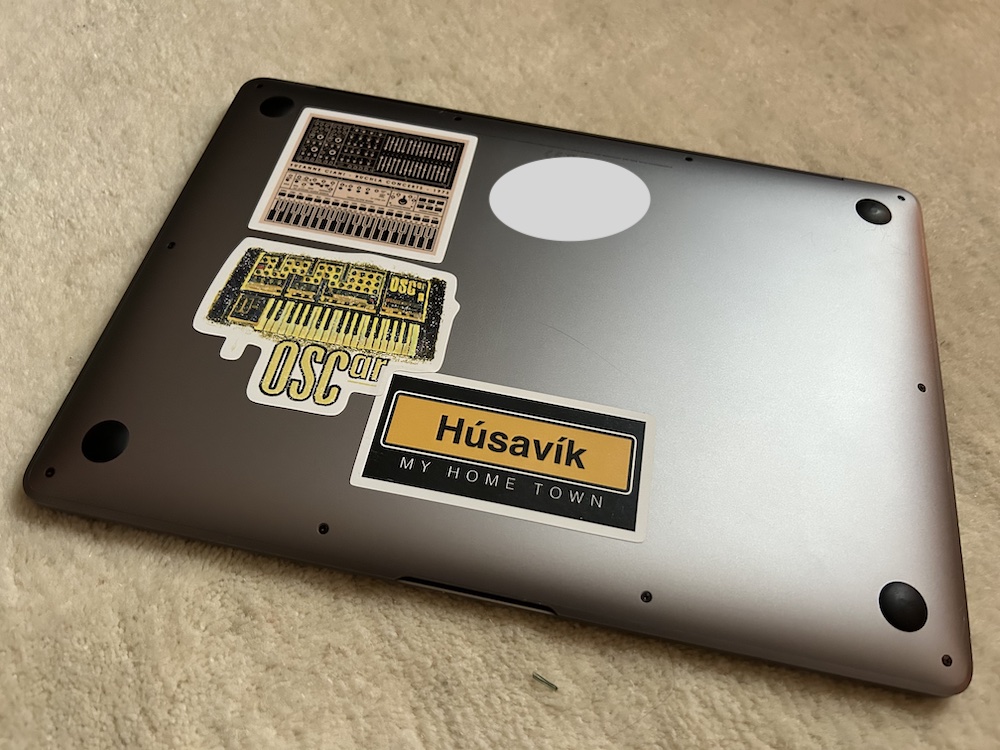
Don’t look back, don’t look back…

Fortnightnote – 31st December – Verygood-byes

First up – apologies for using a portrait-format photo to start this post. There’s a much nicer version sitting on GDS’s slack, taken using the GDS phone, but when I dived in to retrieve it at about 6pm this evening I found out I Definitely No Longer Work For Government.

In a lot of ways I approve of this effective and automated JML process – but I’m a bit sad because the other picture was soooo much better, and more “the moment”. (Maybe Nick or Steve can email it to me so I can retrospectively fix my lack of editorial planning.)

Anyway, that’s the headline. I’ve left GDS. And government – for now.

The last week of Proper Work was really rather lovely and touching. Many folks were starting to ebb away towards Christmas, of course, but that made the moments people made for me all the more precious. Some folks logged on while on holiday – or even came in to the office while on holiday – specifically to see me. For a slightly abstract job, with slightly abstract metrics, they were very tangible ways to know I’d made a difference. Thank you all.

The Tuesday afternoon before Christmas held a lovely lunch with my fellow Heads of Profession. One of the DDs had remarked in passing “other people doing these roles elsewhere seem to slip back into individual work, but somehow you’ve all remained a team” and I genuinely think we remained greater than the sum of our parts throughout. We always tried to model being a multidisciplinary team ourselves – so that we didn’t send out contradictory messages between professions or get caught up in projecting hierarchies as normal – and I think that led to a lot of our own cohesion. I feel bad to be leaving such a lovely and wise group, but I hope the organisation treasures them and finds a way to inspire all that potential – individually and together.

Thursday was our last community session of the year, and my last at GDS. I was talked out of doing an end-of-year pubquiz and instead there was a general “final Q&A with Tom” session, chaired by Martin Lugton. I have always tended to be a bit wary of such things because I worry it just becomes “very senior people talking about stuff that isn’t relatable to the people Making Actual Stuff Happen, and perhaps patting each other on the back”, so I put up a bit of a fight on this. It turned out that Martin’s plan was because loads of lovely people wanted to use the session as a bit of a “goodbye and thanks” session – across both the Heads of Profession and the Product Community. In hindsight, doh! (So much for slinking back into the shadows like Mary Poppins.)

I was given a very lovely and generous present of a Teenage Engineering PO-24 drum machine – which is in the picture above. It’s based around samples of “office sounds” – floppy disk drives, mouse clicks, dot-matrix printers etc, so really pushes my Matthew Herbert microhouse buttons. I’ve had loads of fun playing with it over Christmas, even though I’ve been nowhere near the studio to record any of what I’ve created.

I was sent a Kudoboard (of course) where folks had TRULY EXCELLED THEMSELVES on cat+synths gifs – bravo all! Martin L crafted the loveliest message that somehow contained more Carly Rae Jepsen song titles than I thought could be possible – I doff my cap to you, sir! But folks kept using words like kindness, wisdom, energy, invaluable. So, as far as qual data is concerned, I think I made a difference over the last year.

Quant-wise: I ran over 20 community sessions, getting the attendance up from [the one where I was the only attendee, for the first ten minutes] to about 20 regularly. Not quite 50% of the product people, but it’s getting close to some of the other more vibrant communities. Not bad for 11 months work. I ran about 100 individual coaching sessions. I created a curriculum for two learning days. I created our draft learning plan for product managers. I revised our recruitment processes, restructured and formalised how we held all our artefacts, and was part of bringing nearly 15 people into the organisation.

But also – most importantly – over the last year I made (or rediscovered) some lovely friends.

At the end of Thursday a small group of us pre-Christmas stragglers made it along to the pub and spent a good few hours setting the world to rights. We came up with plans, I hopefully inspired a few people, and then we spent loads of the rest of the evening swapping music tips. I’ve not yet found quite where those tips ended up on my phone, but I know I wrote some down. Steve and Tim, you might need to tell me again in the comments!

Thank you all, you’re lovely, and I wish you all the best. You know where I am if you need to chat!

The cross-government, highly incomplete, mic-drop

I’m not going to re-tell the story here, but I spent a lot of my last week – and a few of the days between Christmas and New Year – trying to finish off a straw-man version of the new Product Management career framework. I’ve had this turning over in my head for months, and compared thoughts with countless others, but never quite managed to find the time side-of-desk to capture all those ideas in one place until now.

It’s going to be a flawed document, and some might say I’ve been a bit too purist or ambitious (because we never had the time to discuss any specifics), but I really hope it’s a way to keep moving the discussion forwards.

Anyway, here’s the blogpost summarising the work. Please do get involved!

Roadmapping – it keeps evolving

Need to add this to the roadmap heuristics post, but as part of trying to keep a particular community session moving I was chatting to Janna Bastow (of Prodpad) and James Higgott (of NHS England) about now/next/later roadmaps – and Janna touched on something really important. I’m UTTERLY going to have to paraphrase, because the discussion is now in The Email Account I Can’t Access but she said something like:

Well of course we don’t know exactly how long the “later” things are going to take, but we’ve discussed them as a team, have a sense of ball-park, and they’ve been validated for both business and user value.

I suspect that’s not how many people use the “Later” aspects of their roadmaps in practice. It’s more of a place to dump rough ideas and stakeholder debt. I tend to have quite good instincts for this, and am quietly picking up evidence as I go, because I’ve been doing this kind of work for a very long time. But that doesn’t necessarily help those around me who are newer to the role. They just see someone putting an idea in “Later”, occasionally asking a few poky questions, and then moving on. I should have been much more explicit about my thinking processes, and where I’m imagining validation needs to happen.

So the key takeaway is: don’t be lazy about what makes it into “Later”.

Everything Else

Watched a lot of films

  • Next Goal Wins – just a lovely bit of simple Taika Waititi heartwarming. A huge hug in cinematic form.
  • Squaring the Circle – a documentary about album-cover design agency Hipgnosis, who created classic artwork for Pink Floyd, 10cc, Peter Gabriel, Led Zeppelin etc. Genuinely charming. Unlike the doc about the Marc Bolan covers album – shudder.
  • Asteroid City – I absolutely loved this, despite my former self. I remember quite liking ‘Royal Tenenbaums’, but I suspect this is mainly because I had a huge crush on Gwyneth Paltrow after ‘Shakespeare in Love’. After that it was all downhill – and I absolutely vehemently detested “The Life Aquatic”, with online audit trail. But the kids really liked his “Fantastic Mr Fox” animation, and about a decade later the Peter Greenaway fan in me fell for the visual structure in his follow-up animation “Life of Dogs”. I softened a bit to “Moonrise Kingdom”, a bit more for “Grand Budapest Hotel” and was sold by the time of “The French Dispatch”. And so, to “Asteroid City”. It’s the most utterly wonderful bit of not-taking-himself-seriously, but rinsing every bit out of his style. Hearty recommend.
  • Polite Society – this is a total delight. Flawed, but utterly worth watching. It’s from the same person that created “We are Lady Parts”. It’s got all the surreal magical-realism of “Spaced”, with spectacular set pieces and majestic suspensions of disbelief. The tragedy is that if it had been from Edgar Wright I’m sure we’d have heard tons about it…but it’s not by a white man.
  • Tetris – a load more fun than you’d expect. Taron Egerton is trying to find out whether he has or hasn’t got the rights to sell the game to Nintendo, and in the process comes up against the corruption of late-stage soviet communism, and how the likes of Robert Maxwell were so cosy with it. Turns unexpectedly into something of an action thriller near the end. Well worth a watch.
  • Wonka – wanton silliness from the folks behind “Paddington 2”, with songs from Neil Hannon and a soundtrack by Joby Talbot. So, in a lot of ways, it’s a “Casanova”-era Divine Comedy album writ large. An absolute ton of delightful fun, with tons of comedy veterans fleshing it out – Matthew Baynton, Rich Fulcher, Paterson ‘numberwang’ Joseph, Matt Lucas actually acting rather than being Matt Lucas.
  • Bottoms – unexpected recommendation within ‘my group’ of bafta voting, but also from the daughter, but a totally super-duper parody of teen movies, with the silliest ending ever. Two high-school lesbians create a ‘fight club’ in order to get off with cheerleaders. It’s utterly ridiculous, but also totally brilliant. It ticks all the Edgar Wright boxes that ‘Polite Society’ does, but even more spectacular mockery of the genre. Out of all the films, this is the one you’re probably least likely to try – but it’s utterly brilliant – and so that’s why it gets the trailer link…

Christmas was great – a new expander for one of my favourite modules, a wonderful Hooksmith Press picture of Wanstead’s famous turaco bob, the DVD version of Peter Gabriel’s new album i/o with all the surround mixes, Spiderverse2 in UHD (for private sobs), tons of fabulous books, and even a hat crocheted by my daughter. And I gave even more delight, fingers crossed.

I hope you also had a wonderful time with family and friends.

At some stage I might write about plans for next year, but mainly I’m just looking forward to a new start…and another clear week off to rest, think and create.

Nudging along the government (DDaT) product management career framework

For the record, no I’ve not actually finished all of these.

tl;dr: I’ve tried to write a more modern set of Product Manager roles and skills as my parting bit of value for other ProductFolk in government. At the end of this post there are links to read-only google docs of my straw-man proposals for new role descriptions, skill descriptions and skill levels at the end of this document, plus some other bits of guidance I drafted. They’re not perfect, but there were a lot of discussions leading to getting this far, and I REALLY want this to maintain momentum once I’m gone. The google-doc links are already public, to enable sharing across government, so it feels a small leap to be sharing here in case I’ve missed any important stakeholders. Please join in the process to improve the doc, and finally make something from the 2020s the standard we’re all aiming for.

One of the odd “loose ends” of my time in Cabinet Office was something of a favour. But it was a favour I cared about a lot. And one I really felt I had to find a way to squeeze in before I left government: fixing how we describe “what good looks like” for Product Managers across the public sector.

Background – the problem

The way our roles are defined in government, the skills that matter, and how someone is supposed to progress through their career is set out in the “Digital Data and Technology Profession Capability Framework”. Like all standards, it’s owned by the Central Digital and Data Office these days – setting and maintaining standards and policy were separated from GDS’ remit a few years ago.

The framework is an epic piece of work, and all credit to those involved in the original creation, but for Product Managers it’s looking a little long in the tooth. Which is a problem if you’re trying to use it to set pay, development and progression. You need to be able to encourage and reward the behaviours and skills that matter. It’s also a problem if you’re trying to recruit the right sorts of people into your profession, because you end up filling in a lot of extra gaps in the job descriptions.

At DIT we had a strong marketing and promotional aspect to our work, and weren’t a monopoly provider of advice, which gave us licence to add the sorts of Product skills we needed to the standard framework. DFID did much the same. But GDS and CDDO are still really closely entwined – it doesn’t look good for GDS to be “going it alone”. So when CDDO asked for some of my expertise in refreshing the framework back in late Spring, I jumped at the chance…only to realise this wasn’t strictly GDS work, I still had a day-job and this would have to remain strictly side-of-desk. Which is why it’s taken over six months – and the massive deadline of leaving government completely – to get anything out of the door.

CDDO’s initial concern was that the skill levels listed for “Lead Product Manager” and “Head of Product” were the same – and wondered if I could find a way to make a difference. However, nearly all the skill levels for both of roles were already “Expert” – and the only skill that wasn’t (Financial Ownership) didn’t make sense as the only element of progression.

I decided that the skill levels were right – but it was the *job* that changed and the skills were being used at higher levels of abstraction/scale. I wrote some draft guidance on this – aka “Expert is never ‘done'” – which has been used internally at GDS a bit, and got shared by other professions. This scrappy guidance is further down the document, after the other links. I hope you find it useful too.

But as I picked away at it, there were loads of other itches that needed scratching…

So what did I decide needed to change?

Oh, sooooo much, but here’s a list of key points:

  • The framework doesn’t truly say – to outside eyes – why you need Product Managers and why they’re different from other disciplines. At the height of GDS’s influence on changing government, and when everyone had given up on the shared myth of detailed project plans, this may have been Very Obvious. However, as a new generation of leaders have emerged we can see calls for Solution Architects, Business Architects etc re-emerging – so need to make the case for what we do AND WHY much clearer
  • There are critical skills where people suddenly jump from “awareness” to “practitioner” level when moving from Associate PM to PM. I wanted to set “working” as the goal for a few of the APM roles – even if it sometimes meant writing a new definition. The skills were too easy to achieve at ‘awareness’, and too vast a chasm to bridge at interview. How can a framework help enable useful conversations?
  • In the case of financial awareness, the framework missed out a valuable “working” step that helps highlight the importance of making value-for-money decisions about any given piece of work. Teams need to have better discussions with stakeholders about value released, and better conversations about the financial cost of effort. Even at associate level, a sense of benefits and burn rate is useful. I hope the revised skill is a useful lever for taking ROI more seriously – even if we have to just use estimates for team costs.
  • The “user focus” skill was just soooooo out of date, and hugely directive. It talked about user researchers as though they were just usability-testing drones, working at the bidding of the product manager using methods chosen by the product manager. Or, even worse, expensive frustrated researchers being used as BAs. I wanted to recognise the role of strategic research, and the skills needed to help that happen…as well as the skills needed to avoid six-month-long inconclusive discovery projects. There’s no mention of assumptions testion through bespoke prototypes. Folks, Teresa Torres has been a thing for ages now. Which means we also have frameworks for “interesting research we will need to park for now”.
  • The Product Ownership framework just talked vaguely about ‘tools, terms and techniques’ without saying what any of those were. It also didn’t highlight how the craft had become a vital blend of bringing together business, user and technology perspectives to make hard choices – or the importance of evidence-gathering in the face of uncertainty.
  • Although the Product Ownership skill overlaps slightly with Agile Working, neither really touch on skills from either of the disciplines many early Product folk emerged from – Project Management or Business Analysis. We’ve been so keen to emphasise the new, somehow these essential craft skills were left behind. Being able to map a system and process to find the core thread is essential to defining an MVP; knowing a set of likely delivery steps and how long they’re likely to take is essential to both spotting assumptions and building confidence with stakeholders. That ‘decomposing problems’ aspect starts at the feature level, and continues all the way to programmes – but we hardly mention it.
  • Strategic ownership didn’t tackle the idea of building long-term plans that catered for uncertainty, nor the skills needed to help stakeholders acknowledge risky assumptions within their plans.
  • We didn’t really talk about measuring success
  • The “DDaT Perspective” skill munged a whole pile of bits together that were really about team-working or standards – which could have been dealt with as part of agile working or constraints.
  • Problem Ownership/Working with Constraints/Operational Management all overlapped
  • Programme management and longer-term planning are a thing. Governance matters. We can’t just keep hiding behind startup talk of “now/next/later” roadmaps as though running late is someone else’s problem. OKRs need to get us somewhere. (See my post about roadmaps.) Otherwise SAFe will be embraced by our leaders through sheer desperation.
  • There are a lot of skills. Some professions get away with fewer. Can we meaningfully simplify without losing stuff that matters?

Standing on the shoulders of giants

I’m not the first person to have a go at this, and neither am I the first to run out of time before it can take effect. It’s also not a solo effort – although this is my personal take on where we should go.

I’m hugely indebted to the work of Michael Gordon’s informal cross-government network of Heads and Leads of Product for listening to me talk about this, and providing their own feedback.

Through this group, I also found out about a 2020 attempt to address some of these gaps, when Jonathan Forman was CDDO’s Head of Profession for Product Management. He worked closely with Scott Colfer, then of MOJ Digital, and they ran workshops to gather feedback for improvement. Jon shared those old documents with me and spent an hour talking through the conclusions they’d come to. Often this was just re-confirming my own suspicions – only the gaps are even more critical now.

Jon also created some valuable bloposts and docs that are still available on github.

I’ve also been lucky to have a group of other Heads of Profession around me at GDS to bounce ideas off – although not to the level I’d have liked.

I’ve had great conversations with folks at NHS, DBT, Deloitte and more about the problems this could help fix.

Finally, the three GDS Heads of Product have been great sounding boards for “what good should look like” in terms of recruitment and job descriptions – all of which feed into this.

Thank you all, for all your help.

But I should be clear that this document is mine, not theirs. Any mistakes lie with me, and I’m sure there are points where I’ve misinterpreted feedback. But I still think it’s a step forward.

The Actual Stuff

These documents are supposed to be read as a hierarchy.

We begin with the role descriptions – what a product manager even is, why they’re different from a project manager, and the sort of behaviours you’d expect from them generally. In short: an acceptance of uncertainty as far as human behaviour is concerned, and a range of techniques we use to try and gather evidence to minimise the risks that people simply won’t do what would be convenient for our business model. (In which case all our business benefits are utterly fictional.)

Then I describe how people are likely to progress through the roles, starting on simpler well-defined-problems where they can learn how to interact with a team, iterate based on usability testing, and maintain a backlog. This then builds all the way to Head of Product – where you’re trying to get insight to inform a whole programme’s strategy, while designing the work so it can be delivered through others.

Product Manager Role Descriptions – December 2023 straw-man draft. (This includes the current description from the standard, Jon and Scotts proposed revisions from 2020, and where I think we should be heading to.)

I’ve then tried to tie this back to the individual DDaT skills – removing a few, updating others, adding a new one Jon and Scott proposed around measurement. I’ve also suggested fixing a few gaps where progression is too sudden…or we forgot to mention something crucial from The Old World. This is the document that intersects with other professions, so may be slower going.

Product Manager Skill Descriptions – December 2023 straw-man draft. (Again, this includes Jon and Scott’s work for reference.)

The document also includes what level skills should apply from. I’ve always favoured presenting this as a map, but simply ran out of time.

The current framework, set out as a map – showing how skills mature across role levels.

Mea culpa: the documents are quite long and wordy. There’s a lot of detail. But I think it’s important for the wider community to decide what can be taken for granted.

There’s also a some-people-found-it-useful document about how to evaluate skill levels that span multiple job levels. Others have found ways to define an “Expert+” level to cater for skill development in G6 folk – but that’s not within the gift of GDS if they’re going to follow the CDDO standards.

What next?

The above are an informed guess, based on conversations around government and prior art – but they need the proper discussion I’ve not had time to do to the level I’d have liked. Any errors in here are mine and mine alone – but hopefully they start some useful debate.

Maite and Antony at CDDO have copies of this, along with links to a few discrete groups of people who’ve expressed an interest in the work – ranging from DWP/HMRC/NHSE through to a wide range of arms-length bodies.

I hope they’ll be gathering feedback on this draft, removing some duplication, and running workshops around any particularly gnarly areas – particularly where my suggestions may touch other professions, or where they might not work for all departments. And finally, Antony will be able to use his content design skills to remove some of the mess in my writing, to make it clearer and shorter for future users.

If you’re interested in how this progresses, talk to the head of profession for your area. If they don’t know how to get involved, then they should talk to the capability lead in their people team, who will be plugged into the work of the Capability framework Design Council. And if all else fails, drop me a line on LinkedIn – and I’ll try to fold you into the work.

I hope you find this useful, and best of luck to everyone who tries to take this work forward. Please leave comments or ping me – I’m really keen to hear what you think.

Weeknote 15th December 2023 – Moving On

So, we should start with the Big News.

As you can see from the picture above, “Tom’s big cloth bag of Product” (© Jess O’Leary – 2018) is home from GDS Towers, as I’m going to be finishing at the end of next week. I am unlikely to be needing a Jabra, random postits, a pile of index cards, sticky dots, or a vast number of sharpies in {the colours nobody steals from the workshop} in the next few weeks.

On 8th January I start a new job, as Head of Product at Which?

I’m absolutely delighted to be working with Rico Surridge again – after more than a decade since our last project. I’m also going to be reunited with the lovely Stephen McCarthy, one of my favourite design thinkers. Plus I know a few of the team from training sessions I ran for Mind the Product, and they seemed delightful. So yay!

It’s also got a really great mix of commercial and social-good aspects. Yes, of course we want to sell more subscriptions, but that helps fund really important campaigns about the way commerce works in our society – to ensure it’s fair for everyone. I’m also hugely excited to be joining an organisation that has Jonathan Moore of SVPG on the board – I am going to need to bring my best game!

Of course, I’m really sad to be moving on from absolutely tons of lovely people working at GDS and in the public sector generally. Making space for product thinking, and creating amazing product thinkers, has been something I’ve totally loved doing over the last nine years. But the last year at GDS has taught me two things:

  • I need a decent change of scene to recharge my batteries. And I need to do that sooner rather than later.
  • I need to have an active role in developing the strategy and leading the people at any organisation I’m working in.

I’m not saying goodbye to government forever, and can potentially see myself in a permanent leadership role there in the future. But…if there’s a change of government and a whole new raft of things to be done, I need to know I’ve got the energy for that. And my slight burnout after DIT has become a bit more brownout. I’ve been pushing similar rocks up similar hills for just a bit too long. L&D, recruitment, community – they’re all great and important…but for me need to be part of realising something I’ve got a stake in. 50% of my time on that – totally ok. 95% – I’ve discovered that isn’t me.

And yes, it’s very rare for anyone to 100% own anything in an organisation of any size. Lots of decisions need to involve many viewpoints. We are often leading or managing by influence. And yes, there are definitely programmes I’ve improved by stealth. There are loads of people who’ve made huge progress in how they do their work, and I’m really proud of the part our coaching sessions together played in that. I also don’t want to steal their glory – I love letting other people shine. But something about this role hasn’t quite worked for my particular way of being. I tried a bunch of different approaches, like any product person, but on a personal level I never quite hit product-market fit for TomDolanAsAProduct. I’ve pivoted enough times. It’s time to try something else.

So I’m really looking forward to the change, the challenge, the new colleagues…and yes I’ll admit it, a kitchen that has a coffee machine that provides cappucino on demand, made from milk in it that I didn’t bring in myself. The offices are LOVELY and right by Regent’s Park.

But first, a week of wrapping up GDS, then THREE WEEKS OFF.

[Once the dust has settled, I remain totally up for chats with former colleagues of course. You’re top people, and I want to see you continuing to be brilliant.]

What’s left?

Good question. The to-do list is long, and there are some things I care about loads that I’m not going to be able to finish. So it’s about setting things up as well as possible to continue when I’m gone. I’ve always moaned about how few agile projects have a properly-framed context and kickoff, so it’s time to put my money where my mouth is.

This includes:

  • how do we wrap up all the improvements we’ve made to recruitment, to cover all directorates and all job levels?
  • what are we going to do with the career and skills framework for Product Managers, and who needs to be involved?
  • how do we launch the “Introduction to Product Management” course on Futurelearn that we refreshed back in the summer?
  • how does the community sustain itself and know what to talk about, so it doesn’t wither once I’m no longer there willing it into being?

This list is already too long, as I’ve only got 4.5 days left, but hey.

There’s also a nice xmas lunch with my fellow Heads of Profession to fit in. And some leaving drinks that lovely Steve has organised – to recover from. And reminding people I’m still there if they need a chat.

Inbox-taming for the useless

In a team meeting the other day, a fellow head of profession showed off a Gmail plugin they’d been using to help improve their workflow. A sort of macro language. “gda” triggered some particular filter around “emails today”, that sort of thing. It looked really interesting, but for me the revelation was that I’d never truly understood how simple the filtering language for gmail was.

I’ve said before that I don’t really like having everything in the same browser window as it stops me being able to focus, but I also find GMail quite hard to use in a work context. Threading is hard to keep track of. Your inbox rapidly becomes a partially-read infinite-scroll of shame. And because time and context are intertwined, I often find it hard to create a bite-sized chunk to deal with.

But the macros showed me this was possible. Easy, even. And I didn’t need the macro thing. I just needed this Gmail reference page.

newer_than:2d in:inbox in the Gmail search bar will give you just the stuff in your inbox today that you’ve not yet filed. Which you can quickly iterate up to being newer_than:7d in:inbox, and start fighting your way through the backlog. Then you can start looking at newer_than:5d in:aaNextActions (where I file stuff I need to do but needs thinking) or newer_than:5d in:aaConfettiTime (where I file non-urgent things that I need to do but are distractions from flow) and finally start picking off the things you said you were going to do most recently.

And I was so inspired by how effective this was that I’ve created a ton of similar “smart mailbox” views in Apple Mail. Last night I “read” and filed about 1800 emails, and dealt with about 2000 old emails from the inbox that were probably read on the phone and just slightly too high-friction to file at the time.

So do try this approach if your inbox is burning. And let me know how you get on.

Miscellany

I’m making more of a concerted effort to read longform text again. It’s a skill that’s withered as more devices and windows and chat tools and social platforms make it ever-harder to get into any flow or focus state. But I’m about to enter a new job, where I’m going to have to get up to speed on quite complex things. And I’ve got a lot of stuff I want to learn/read about that’s building up – around work, music and being. Or just because it looks like a good story.

Currently I’m devouring Philippa Perry’s “The book you want everyone you love to read”. It’s bloody brilliant. I picked it up in Foyles the other day, with an eye on it being a small present for didn’t-know-who-yet, and was still turning pages five minutes later. There are loads of examples that start of not seeming that relevant to my life, only two pages later I am thinking “BUT THIS IS ME HOW DOES SHE KNOW”. I should have known this would happen, because her Guardian columns follow the same pattern. Hindsight, eh? Anyway, it’s great. If you sometimes feel like your janky corners or lumpy feelings don’t quite fit in this world, buy yourself a copy. And if you do, buy yourself a copy anyway.

Piano is toddling along with depth work on the Schumann pieces. Didn’t think I was making tons of progress until I tried playing Debussy’s “Claire de Lune” for fun, and what I can bring out of it now is a whole new level compared to three months ago. So that’s nice.

There’s been a bit of modular nonsense going on too. Mainly based around a software-emulated version of the “Turing Machine” module that I bollocksed up soldering last week. Poking around in the Disting module and all its menus isn’t as tangible, but it did remind me why I wanted to do the project in the first place.

No new music of note this week, but here’s some current listening:

  • Peter Gabriel – i/o (still)
  • Kylie Minogue – Kylie Christmas (Snow Queen Edition)
  • Free Love – Inside
  • Dubstar – Two (a rediscovery)
  • Anne Dudley – Ancient and Modern (this is an honorary Christmas album at ours)
  • Cate Brooks – Easel Studies
  • EMF – Stigma

Enough writing. Time to start doing.

Weeknote 10th December – (quiet, but in a busy way)

The Music Thing Modular ‘Turing Machine’, finally completed. OR IS IT???

A shorter note this week. I’ve been pretty productive, but there’s less specifically to talk about.

I had a few really good coaching sessions this week, across all levels of the organisation. Everything from product principles and strategic objectives through to the practicalities of making your first prioritisation calls – and that feeling of dread the night before sprint planning: “what if the team say this is all bollocks?”. I got some truly lovely unsolicited feedback from a few folks on how much these sessions have been helping them, or from leaders saying they can see the change I’ve brought about in others, which has been very welcome. This ‘head of profession’ thing can be a bit of an isolated job at times, with a lot coming out and not much going in, so those moments of recognition are doubly appreciated.

We had a community session on roadmapping, following up from our ‘learning day’ activities and the idea that any given roadmap is for a given audience. Seemed to go OK, but a lot of folks are tied up with business planning, so it wasn’t as well attended as I’d have liked. Hoping to form some action learning sets on the back of it all, but need to work out when, given that…lots of folks are tied up with business planning.

I’m still improving our recruitment processes, and that’s meant lots of chats with fellow profession leaders, our Head of Recruitment and also the Deputy Director for People. I also checked in with some former colleagues about changes they’d made after I’d left DIT, to see how some of my ideas evolved a year in. Lots to think about, but it’s all good progress.

I’ve got a bit of interviewing to get through next week, sitting on panels myself, but I’m hoping to try and finally start work on revisiting the cross-government Product Management career framework. It’s really good, but has a few issues:

  • Product management as a practice has moved on since it was created – assumptions testing, continuous discovery etc should be much more commonplace
  • It treats user research as the only way to validate things, rather than data where the cost of being wrong is low
  • It treats user research as only being about usability, that the product person heavily directs, rather than something which can inform strategy when working with very experienced researchers
  • It assumes that financial ownership is only about cash and budgeting, when the biggest cost of a team is the people – and product people could be considering the (estimated) burn rate of their team and ROI when prioritising a lot more than they are
  • It treats strategy as an artefact, rather than a continuous process that also covers longer-term delivery planning

I’ve been thinking and chatting about these improvements for ages, but I still need to bring it together into a coherent form that folks can react to. There’s a big meeting in late January where I can present my thoughts, and maybe even get those changes signed off – but it’s going to be pretty damn brisk if I want to get stakeholders across government bought into it by then, especially with Christmas. We’ll see.

I also managed to lightly rein in the feeling that my brain is in ‘spinning beachball of death’ mode this week, and got a few more tasks done. I’ve always got so many long-term contexts on the go, but Slack (plus slack culture) seems to be much better at distracting me then Teams ever was, and I’ve found it so hard to get into a flow state on anything that – particularly since covid – I’ve almost given up. Much as I’m a fan of GSuite compared to Office365, I also think that having everything in the browser makes it much harder to concentrate. You still have ‘all the other stuff’ open in tabs – whereas in O365 you can at least be only in Word for an hour or so. I’d really been feeling like I was losing the war with the to-do list over the last month, but this week felt loads better; I could enjoy completing things, which led to seeing new asks as something to achieve and help with, rather than being the arrival of Yet Another Thing That Probably Won’t Happen But Will Make Me Feel Guilty. I basically started by setting aside some time at the start of the day for those tasks that will only take five minutes, but never get to…until I’m reminded of them in the middle of trying to do something substantial, shattering concentration. The good feeling of getting those done at the start of the day gave me a confidence to start tackling those bigger things, and start getting faster at them as well. Slightly the opposite of my normal approach to “tackle a big thing first” but it seems to be working. So that’s another bit of covid-brain receding – on both a cerebral and emotional side.

I managed to overcome the procurement hurdles with the new coaching client, which is great. I should be able to finally kick of sessions with them at last this Friday, which is excellent news. It’s a very exciting project, but sadly NDAed up to the gills.

Continuing with the secretive vibtes, there are also some other bits going on that I can’t talk about yet, but look forward to sharing soon.

Non-work corner

On Friday I caught up with Liz Sarginson and a bunch of the old GDS ‘Tech Ops’ folks to celebrate her being cancer-free. A lovely evening of comparing notes with people who are now scattered across government and the UK, but I was a bit exhausted and had to slip away after pint number 4. Particularly as others looked like they’d happily be there all night.

This weekend I also finally had enough brain space and spare time to pick up a DIY-synth project that’s been lurking in dark corners of the dining room. It’s a sort-of-controlled-randomness unit called a ‘Turing Machine’ that’s a key bit of many modular synthesis setups. But you have to make it yourself. Which takes time, which has been in short supply, and soldering skills, which are very rusty. And attention to detail – well yeah, good luck with that after a long day flipping contexts.

I am an absolute bloody idiot.

This was manifested when I finished the first board only to realise that I’d soldered two little edge connectors in the wrong way up. They should be on the underside, not with all the chips and resistors. But because it’s soldered in 16 times, it’s absolutely impossible to get out again. You can’t keep all 16 solder joints molten to pull the whole thing out. So sadly, there was only one possiple approach:

Carnage.

Basically each of the 2×8 headers had to be broken apart and taken out a pin at a time. I’ve got some replacements on order to put in at a later date – I don’t need them until I’ve finished making the expansion units.

Anyway, it’s fully made now – you can see it at the top of this post.

Sadly, and much to the shame of a person who got an ‘A’ in their Electronics O Level, it doesn’t actually work properly yet. A mere detail.

The white noise circuit (used for generating the randomness) doesn’t appear to be generating any noise – so it doesn’t do the thing it’s supposed to just yet. And similarly the looped set of 1s and 0s seem to somehow automatically reset themselves to going round as 000000011111111000000011111111 forever, no matter what starting pattern you put in. So there’s a bit of poking around with an oscilloscope and voltmeter to be done, while looking at circuit diagrams I barely understand, tracking down where something is shorting or I missed fully creating a solder joint.

I did have a brief moment where I was comparing the tradeoff of “the time doing this diagnosis” and “just buying another kit and doing it properly this time now you can solder competently”. The kit even got as far as the shopping cart when I decided that I didn’t have to treat this like another chore or work task. It’s supposed to be a fun hobby where I learn. And I have all of Christmas where I can take my time to do things like that.

Piano’s finished for Christmas. A good lesson to end on. We really got into the depths of just two bars of one of these Schumann pieces, a habit I’m finding it much easier to stick to now. Seb’s really happy with how much better my tone is, and how much more weight I’m putting into the keys, after decades of floaty synth playing. I also got him to look at the puzzling left-hand of the Dario Maranelli piece that opens “Pride and Prejudice”, and I was delighted when he agreed that the fingering I’d worked out was indeed ‘the least shit option’. So that’s a win.

Elswehere in music I’ve been picking away at Electronic Sound magazine’s top 50 albums of the year. There’s some really great work in there – but jesus it’s all a bit bloody bleak. Thank heavens Alison Goldfrapp’s joyous album “The Love Invention” is in there to lift the spirits.

Right, time to open the Marsala and start making a few Christmas plans. Have a good week everyone.

Weeknote – 3rd December – some light unfurling

RIP Bob. (Photo by Lucy Serpell)

Yet again, this is a belated weeknote. I started the weekend full of expectation that it would be with you early Sunday evening, but sadly it was delayed due to reindeer. Yes really. More on that later. It’s been a big and productive week.

On Tuesday afternoon I was teaching the final “Product Leadership” workshop with Dharmesh. It’s been a group with quite a broad spread of experience, so it’s taken a fair bit of facilitation, but they’ve all been genuinely lovely and sharing. Waiting for the final feedback report, but everyone seemed to get on – lots of LinkedIn sharing in the chat – and get lots out of it at their own level. I’m looking forward to having a lot more weekend and evening back, as these courses take a lot of preparation.

Talking of feedback, I had a bit of a look at some of the feedback from the events we ran for the Product Profession on GDS’s recent “learning day”. Some stuff appears to have worked very well, and given people things to think about. I was pleased I split the Leads/Heads away from the ICs, because that dedicated time for “meta” thinking seems to have been very valuable. And it gave the ICs time to worry about the everyday mechanics without some senior person dragging it up to “the big picture”. I think some senior PMs may have felt a little understretched, and perhaps a few folks were getting focused on artefacts rather than mindset, but it looks like it’s been useful.

Of course, the next step is embedding it all – turning it into action. I’ve repurposed our community hour this week to try and make it tangible by doing some peer reviews of roadmaps in small groups – but reviewing the roadmap through the lens of “what audience is this for?”.

Talking of the community hour, I’ve massively simplified the structure of these – starting from next year. With the honourable intent of inclusion, these had become scattered around the diary across a twelve-week cycle. However, this cycle only applied to product managers – everyone else had a different pattern. As a result these meetings had become hard to predict, and your team members nearly always had something else they wanted you to be in…and attendance just had a million reasons to be low. Instead we’re trialling just two alternating slots: Tuesday morning and Thursday afternoon. There are a small number of people who can’t come to one of those two, but nobody’s permanently excluded and it should be much easier to plan around.

Lots of work on recruitment – I’m trying to standardise our Lead PM artefacts this time round. A very 4D-chess style problem, fitting together skills and behaviours and job descriptions and adverts and policy…but I’m getting there. We’ve also got a recruitment drive with much more robust file permission handling and workflow, so hopefully it’ll mean teams have less cognitive load to do the right thing.

On Tuesday morning I also managed to squeeze in a trip to Deloitte Digital’s offices for (the first half of) a day they were running on the state of Product Management in government. It was a wonderful chance to see a load of old colleagues – Scott, Debbie, Jeremy, Simon, Priya, Cordia and more to talk about some of our challenges and how we were going to improve things.

One unexpected treat was a segment where former-DIT-boss Miranda talked about the Product setup at now-DBT. It was interesting to the wider room I’m sure, but to me it was mainly a huuuge list of all the amazing things we’d put in place together. For a variety of reasons (things like: being a contractor who needs to respect their perm replacement, diaries fizzling out before Christmas, other crises, a really crowded leaving party that didn’t lend itself to speeches, and more) this looking-back just never really happened when I left – and so I’d almost thought I’d imagined it. But no, there it all was – and in the chat afterwards there were even little touches like references to my daft Gromit-laying-down-track desktop wallpaper as a metaphor for how we work. The morning was a wonderful reminder of all we’d achieved and what a great team (and occasional double-act) the two of us had been. Some proper closure. My best onward wishes for her and the gang.

In the group discussion afterwards we talked about some of the problems with agile planning and roadmapping, and how we could build trust…which led to me going off on a light five-minute rant about making roadmapping and roadmaps better. That I realised was far better than the enormous never-finished article I’d been working on for ages. In that it actually existed, however scrappily.. So the following evening I just splurged it all out in a forever-draft blogpost on roadmapping principles, in the hope that some people might find it useful.

Um, it’s gone a bit insane really. It made it into Emily Webber’s “Posts from Awesome Folks” newsletter, Neil Williams’ latest weeknote, Jock Busuttil’s “Producthead” newsletter, been reshared in loads of other ways – and is still growing momentum. I’ve even been asked to guest on the “Talking Roadmaps” youtube channel. Eek.

Anyway, it genuinely is perpetual-draft. I’ve updated it with two more additional thoughts I’ve had since, and will keep tinkering as I go. Please add comments so I can carry on improving.

Other work miscellany:

  • Product in the Aether 48 was just lovely as ever. Such a delightful and supportive group of people. Thanks, Randy. Again.
  • Struggling slightly with getting set up as a supplier to a new client. It’ll get there, but I’m definitely not the type of business their finance team are used to dealing with.
  • Bought two new books that people have recommended for ages: “Just Enough Research”, and “The Mom Test”. I always resisted the latter because I’d assumed it was a patronising “so simple even your mum could use it”, but it’s actually about “your mum will always tell you your ideas are brilliant, and so will research participants”. Looking forward to that.
  • Haven’t actually finished any books, but I’ve been enjoying some articles about Andy Weatherall in the latest “Electronic Sound”.

Leisure Corner

On Thursday I met up with some old colleagues for the BBC Fictionlab Execs Christmas Lunch. We’ve been doing this for over twenty years now, even though none of us work at the BBC any more. Just a lovely chance to watch another year go by and celebrate a long friendship.

On Friday I had a slooooow start, then headed into town to try out pianos in Wardour Street. I’m idly thinking about getting rid of our ex-school baby grand, and want the replacement to be a hybrid one, that you can put into silent mode and play electronically past 10pm. But that means the electronic version has to be good as well. I tried a Kawai a few months ago, and it was like a soundcard from the 90s, even though the acoustic piano was good. But the Yamaha version is much, much better. It even supports half-pedalling, where you lightly dampen the strings to take the edge off sustain. Very impressive. Playing the acoustic piano’s always a bit more daunting as you’re in a Serious Piano Room. But in among the Debussy I did sneak in a bit of Kylie and a small drop of Robbie Williams’ “Let Me Entertain You” before leaving in a hurry.

Popped along to BAFTA for a recuperative lunch and some thinking/writing, then to old MOJ Digital pub “The Buckingham” because a former colleague was passing through. Amazing to see so many old friends – there were a lot of hugs.

Really good piano lesson on Saturday. These Schumann children’s pieces are helping me fill in loads of the missing foundational technique I skipped over as a synth player who then moved onto the piano in later life. An unexpected bonus from Covid – which left me with no brain and unable to cope with Bach.

We also had Vicky’s christmas choir concert on Saturday evening, which Daisy came home for. I must admit I’m never going to love Benjamin Britten, but the rest of it was just great. They made us sing along to all the ones that make me blub when the descant kicks in, so the world was saved my weeping face. I can save the snotfest for “Carols from Kings”, as is traditional.

We also put up the tree, and Sunday night was the “glow up” of our road – everyone comes out into the road to look at lights, drink mulled wine, and someone normally sings some songs.

Unfortunately I missed all that, because I was taking Daisy back to UEA…which took nearly five hours because the A11 was blocked. Due to reindeer on the road. We never got to see the reindeer, but we read the reports – and saw all manner of emergency vehicles go past trying to clear them. So I wasn’t back until stupid-late on Sunday, and this didn’t get finished. Hence doing it now.

But I did get to listen to the new Peter Gabriel album “i/o” A LOT. It’s really very good and you should totally buy it. Very strong “Us” vibes, but with a hint of PG2 and some amazing grooves. “Road to Joy” is my current favourite – there’s no way this should be by a man in his seventies.

The only other big news here in Wanstead is that Bob, the elderly and much beloved (escaped) white-cheeked Turaco – who’s been raiding bird tables and pestering unwilling chickens for probably twenty years – passed away. He’s in Wikipedia and everything. He picked up a chest infection in the autumn, and has been back in captivity while they hoped he’d get better, but sadly it was not to be. I’ll miss that whoop-whoop call on summer evenings, and the flash of red from under his wings. That’s him at the top of this, and here’s another shot of him eyeing up the laydeez. Who, as ever, were having none of it. RIP Bob.

Photo by Sarah Venis

Tom’s Roadmap Heuristics – a work in progress

I’ve previously trailed a massive blogpost-that-might-be-a-book about roadmapping, but I suspect it’ll never get finished enough. However, earlier this week I was at a chat about the future of Product Craft within government, and mid-discussion spontaneously reeled off a list of my top reckons on the subject. Given that I had managed to do it on the fly without much thought, I decided to have another go – using largely the same scrappy approach.

A kind of roadmap of sorts – this early one got thrown away almost immediately.

Caveats: 1) this is ‘perpetual draft’; 2) unlike a lot of product writing it’s aimed at larger organisations where technology/digital is seen as a supporting function to “the business”; 3) these are in no particular order of priority; 4) these comments are aimed at no particular team I’ve ever worked with.

Roadmapping is more important than an actual roadmap. Too often we do a massive one-off exercise and then never look at the damn thing again. We need to get good at these discussions. And at turning them into an artefact that’s up to date.

External milestones can go in, delivery dates can’t come out. If something needs to be delivered by a particular date because something else essential is happening, like a transmission date or an event launch, then that’s essential context for the team. Not telling teams that context is pretty negligent on the part of leadership. But…beware external forces loading extra fake external milestones to try and make projects go faster.

(In the image above, you’ll see the pink postits at the top. This is another aspect of capturing context – me saying to the team “what I think will be happening in the organisation at this point”)

Now/next/later may be your friend – it isn’t everyone else’s. Too often I see “later” being used as a catch-all for everything we’ve ever thought about ever – a place to put stakeholder promises we’d rather forget. The new “icebox”. But this leads to two problems. Firstly that teams haven’t truly thought about which parts of “later” are the most important – they don’t know the critical path to getting “the most likely thing” to happen. Secondly, because they don’t know much much “later” there is to be done, they don’t know how quickly to declare their “now” done so they can move onto “next” and get to that important pile of “later” before funding or patience runs out. Which leads to…

Roadmaps aren’t delivery plans. But you should regularly have a go at trying to create one. The process of trying to turn that pile of ideas into a delivery plan is – in itself – an important activity. It flushes out truly critical unknowns – what’s it going to take to know whether that crucial item will be one month or six? How soon is it sensible to investigate that?

Include discovery activities in your roadmaps – what are you trying to find out? You really don’t want to be taken by surprise when starting something new, and you also need to focus the minds of your stakeholders on any decisions that they need to have made, or the most important things they need you to find out, if those precious developers are going to keep on working on the most important things. Don’t have the team hanging around for two weeks while you wait for something to be signed off!

Changing your roadmap based on new information is important – but is part of your governance. Too often changes to roadmaps or changes in scope happen quietly in the corners. We had all those caveats on the slide saying “this may change at any time”, right? And hey, we don’t want to worry people, do we? Sadly, this means that we end up hiding important knowledge from those who most need to know it. What have you found out that means the plan is wrong? How might it affect the overall strategy? The biggest danger is that your leadership are still out there proudly defending a plan that you know is wrong, and they don’t. They’re doubling down on bets to give you air cover, that you know they should be backing away from. Projects used to run late, but the decisions about why led to inspection and improvement. Just because we’re agile, it doesn’t mean we should let ourselves off the hook on this important process.

Know how to safely change your roadmap. Find out who needs to know, and when. Make sure they’ve always got easy access to the latest version, and know what’s changed. Showing a senior leader a roadmap, but then saying they’re not allowed to show it to anyone (because you’re worried it might change) helps nobody. Like planning, you need to learn from devops or incident management. If it hurts, do it more.

The best roadmaps are made of problems to solve, with value attached. I love outcome-based roadmaps. Ideally there’s a supporting document that expresses them as a set of candidate/possible OKRs (depending on how far out they are). OKRs are harder than they look, particularly if done as a process or culture not an artefact i.e. properly, but the thinking behind them is really important. And hard. Which is why people try to get out of doing it. HOWEVER, if a team doesn’t have a sense of how much value is going to be released by looking at a particular problem – and there’s not a business stakeholder on the hook for getting that change to happen in the real world – then there’s no way of knowing how long to spend on that particular problem. So people over-research, or gold-plate features. Know how many weeks of effort would be break-even, at the very least.

Sometimes it’s ok for the roadmap to have nouns in, if that’s the best way to create alignment. Don’t be synthetic and bury the lede. Sometimes the end result really is “replace legacy system x before the contract runs out”. Don’t dress it up as an outcome and confuse the teams.

Everything on the roadmap should have lots of context, that’s easy to find. Sometimes we’ve talked about possible ideas that could release the value, which might not be terrible as starting points. We waste time getting teams to think about it from scratch. Sometimes there have been lengthy discussions about why this thing needed to be on the roadmap. The team shouldn’t be five weeks into the quarter when someone finally digs out a deck containing critical information from their inboxes. “I thought you’d seen this” is a way of offloading the lack of preparation onto the teams. Lead with context, or it’s your own fault. Have a folder/confluence page for every big outcome, as soon as it’s on the roadmap.

Make sure the roadmap is tied to something based in the real world that shows why this is the roadmap. As Janna Bastow says, your roadmap is a prototype for your product strategy. Explain your product strategy that led to you making the roadmapping decisions. Make it easy to understand and easy to find. What are the even/over statements or principles you use to prioritise; what’s your understanding of the business context that led to you making these calls? Transparency here is critical. Radiate intent, so that if one of those principles turns out to be false, people can help you alter your roadmap to deliver the right value sooner. It also shows you understand your organisation. Which leads to another point…

A roadmap is a strategic alignment tool for building trust. The way you use your roadmap, the way you explain the decisions behind it in ways that have empathy for those that depend on you, the way you show your thinking…it’s all part of a two-way conversation. You need to use it for user research and to build understanding, not just for telling people why you’re right. You want people to know you’re acting in the organisation’s best interests, with integrity.

There will always be someone who wants to use it as a delivery plan. To defend against this, make sure that you have the air cover about these ways of working, and is prepared to back this at a senior level. (Which means giving your leadership something useful to work with – they need some of the raw material, and the behaviours, above). If you’re behaving responsibly and sharing bad news appropriately, the organisation should be able to say that they were foolish for taking it as something concrete, rather than being able to “hold you to account” for a document they clearly misinterpreted.

But dependencies, Tom?

I’d also say that sometimes you do have to commit to a date. Marty Cagan talks about these as “high integrity commitments” where the team is given the time to do the investigation to work out how long something is likely to take. But I’d say you can only have one high integrity commitment at a time – because there will be unknowns and other stuff is going to have to flex. (Remember, the BBC adopted agile methodologies on the Wimbledon set-top-box application because it kept missing deadlines, and agile was what let them ship something in time.)

However I must admit I worry about this phrase. It should be the team making the high integrity commitment. But, like “Minimum Viable Product”, I think there’s a risk of it being devalued when leaders think it’s their job to make the high integrity commitments – that it’s their integrity that matters – and the teams are just there to deliver against that spent political/social capital. I hope I’m wrong. But let’s see.

Show your decision points – added 4th December

I touched on this in the session last week, but forgot to include it in this post. We tend to act as though a given team or initiative can just trundle along, working through the quarters – but sometimes we need to call out a point where we take stock and make some hard choices. Everyone needs to know that’s happening, so they’re ready. In traditional GDS-style life-cycle this would be “has your alpha proven you should do a beta” (or – even better – “has your alpha disproven the hypothesis that a beta isn’t worth it”). But it might also be when you decide whether getting from 20% to 50% on a metric is worth the effort.

I tend to put these in the “context” – and yes on a quarter-based roadmap that’ll be a clear timeline, but in a now-next-later roadmap it needs to be somewhere that everybody knows about and which is discussed regularly. A slide that appears in every checkin/huddle/show&tell, as appropriate.

The reason we should make this very visible is because the team need to be ready for that decision to be the best one possible. And they need to talk about it to the decision-makers early on. “Dear Senior Civil Servant, what will make you think that this service/app/portal is delivering OK, but ultimately is a great/terrible idea – so we can get you the evidence for a good decision”. It’s a constraint that helps people prioritise the most important learning to get to the next good decision. And it helps prioritise discussions with wider stakeholders about what matters when: “I know you want us to look at feature x, but is this going to help us make sure we’re ready for that big meeting in July, or is the team going to look unfocused and then put onto something else?”

But dependencies, Tom? (Take 2) – added 4th December

OK, so I slightly got distracted by the above rant about High Integrity Commitments. And yes, I was also tired and just wanted to press ‘publish’. So here’s a better answer. But it’s probably not the one anybody is looking for.

People worry about how you use roadmaps to track dependencies between things. Rightly. But the problem in this is a twofold one of forgetting:

  • Even in old-style project management, dependencies were a total pain to manage, and often a lie. Yes, there’s a bar in MS Project saying that something’s going to finish at point x and then a different bar can start work. But in practice, this was a mess of handoffs and delays and horsetrading and miniature scope-creep/disappointments. That little dependency tool is a fractal mess. So please don’t put the blame on roadmaps for this being hard.
  • Many folks haven’t done tons of this in more traditional environments, so it takes them by surprise – we have forgotten how to have these conversations as a practice.
  • Within the world of empowered agile teams, we see anything that stops every given developer running at 100 miles an hour as an impediment to be reduced – rather than The Actual Work Itself. And that leads too easily to power imbalances – that this is ideally someone else’s problem. We’ve forgotten how to collaborate in an authentic fashion.

So there are a few techniques to apply, and they’re not really even “roadmapping”.

Firstly, as Marty Cagan says in “Empowered”, make sure the teams working on the same things have the same OKRs. Someone’s side-project or favour can’t derail a whole quarter’s work.

Think about the layers of dependency.

  • sensibleness – should we do this
  • feasibilty – can we do this
  • approach – how will we do this
  • confidence – how much it’s likely to change
  • delivery – when will it be ready

Some of those you may be able to put into a team’s OKRs. Team A: by the end of the quarter, you need to have shown this has value and can be done, and have a draft approach you and Team B are 70% sure they can work with. Team B: you need to be 70% sure you can adopt the thing they’re talking about, and it’s going to be valuable for you too.

Perhaps the delivery date is the key thing – in which case you’re in the world of scope management and making sure everyone knows the minimum feature set across both areas – and this is all anyone talks about. You’re storing up risk for the teams further down, but hey.

But the detail of how those five factors unfold and mesh together over time is not something you can just leave to chance on a roadmap – just like you couldn’t on project plan. Making it happen is the real work. And doing in such a way that anyone in any team can pull the (conceptual) andon cord because after user research or tech spikes they’re not convinced this is a good idea any more – rather than just delivering blindly and hoping – that’s the real hard work. But we have to do it if SAFe and its false certainties aren’t going to somehow take over.

Update (24th March): Be disciplined about “later”

I’ve been meaning to add this for a while. I remember an old designer chum talking about the reason why apps and websites have “hamburger menus”. You know, the three horizontal line that reveal a whole host of features and other bits that don’t quite fit anywhere else. He described it as “the place you put your stakeholder debt”, by which he meant the features a team know will clutter up the core user journey and distract people – but represent an idea they can’t persuade someone senior to abandon. You grudgingly build it, and put it in the hamburger menu, so honour is satisfied – but the users are none the wiser.

The same can be true for a lot of the tail-end of roadmaps. They’re far too often a pretty unstructured mess of random “things the team and stakeholders think we ought to look at, at some point”.

I was chatting to Janna Bastow – inventor of the Now/Next/Later format – about this before Christmas. In particular I was saying that, in practice, I don’t think it’s as good at managing expectations and plans as people think it is. “Later” ends up doing a lot of jobs, in my experience, and most of them pretty badly. I was also saying how much I liked the “candidates” feature of her software Prodpad – which is used for things that might go into the roadmap at some stage, but where a team don’t yet have the information to know where and when.

I was suprised to hear her say that she never intended “Later” to be used in this way. She’d always used it for things that had still been sufficiently validated with users, plus there was some technical discovery, and the team had a rough idea how big it was. Maybe they didn’t know in fine detail – things are still agile – but that item had earned its place in the roadmap, and the team were pretty sure it would already wash its face as an area to explore at a price they could afford.

So yes: don’t chuck just anything into the “later” section of your roadmap. It’s not the hamburger menu. A “later” you never get to will just disappoint people.

Weeknote 26th Nov – the unexpected uptick

Hello again. Well, it’s lovely to say that some combination of covid receding, some milestones out of the way, plus a bit more exercise mean that things are slowly starting to look up a bit. It’s been a week of getting things done, taking up space, and looking at the long game. The last from a perspective I really wasn’t expecting.

Meeting impressive people at scale

Things kicked off on Tuesday, when I dashed straight from running the Mind the Product ‘Product Leadership’ course, onto a train, and then into the world of the Government Transformation Summit. As previously trailed, I was hosting a “discussion table” on the Wednesday, and there was a speaker’s dinner the night before – a chance to meet some people we’d only chatted to on Teams/Hangouts in person…and so we actually looked like a bit of collective wisdom rather than some random people who’d been randomly tagged to talk about “joined up services”. I’d been through about two other tables before I ended up on this one, as the organisers juggled various folks last-minute availability, but thankfully I have no shortage of opinions on most things.

As it turned out, there was no shortage of interpretations of the subject of “joined up services” either – everything from user-centred design in local government, through to setting up an office for your business in (heavily federated) Australia, through to “why do I have to use Google Drive *and* Office365”. But I think the four of us were lightly helpful. I got to talk to some nice people from IBM about how you build understanding of AI in non-specialists (to avoid the current dichotomy of either ‘magical thinking’ or ‘technology in search of a problem’ around a lot of data science). I don’t think we had any magical answers to that one – but I did decide it was time for me to book a few days off and properly start to have a play with it all/do some reading.

The star of the show, at both the speaker’s dinner and during the main conference, was Gulsanna Mamediieva. She’s now working at the Georgetown University “Better Government Lab”, but until recently she was Director General at the Ukrainian Ministry of Digital Transformation.

Over fifteen jaw-dropping minutes she took on Ukraine’s firehose-like adoption of digital technologies. Until recently they were in the same sorry state as many other governments – with no interaction between state registers, authorities providing services according to different standards, complex non-joined up procedures with many offline visits even for the digitial services – and then often an official making a very human decisions about the result from imperfect information, with the associated high risks of corruption.

But this has all gone. Everything’s digital, accelerated by the Russian invasion. They created a state super-app called Diia. It has an ID wallet, functions as a digital signature, allows for e-democracy and more. But it’s become absolutely essential as other parts of infrastructure have fallen. It’s possible to get a document that functions as a recognised identity in Poland; you can sign up for benefits if you’re unemployed (because your workplace has been hit by the war); you can register your house as being destroyed during the war; you can buy state bonds to pay for the defence costs. Given that Russia attacked the TV masts, it’s even replaced TV – allowing citizens to want (and vote in) Eurovision.

Alongside that, they’re doing some major investment in building digital skills. The aim is to have all services online, and have over 10M Ukrainians with the digital skills needed to create and maintain a new digital economy. Bold stuff – and hugely inspiring.

Other takeaways I bothered to write down:

  • “Why do you talk about digital transformation? In Estonia, everything is already digital – it’s just ‘transformation'” – Marten Kaevets
  • “Trust is built in drops and lost in buckets” – Kevin Plank, Under Armour (cited by one of the speakers)

I also had some lovely chats with old friends like Jeremy, Sally, Anais and Erica. I made some new fledgling friends at DVSA, DfT, Kin&Carta, CQC and more – who I look forward to bumping into in the future around government. Sadly there were a bunch of people who couldn’t make it due to “Real Life Things” that I’d have loved to catch up with. Liz, Sian and the rest of you – next time!

I’ll finish off this segment with the highly impressive wallpaper from the venue for the speaker’s dinner. There’s no way I’d be allowed this in the house, but could I put it in the studio?

Looking up

Reflecting on the day, I realised that there’s a bit of me I need to kickstart again. I used to have crazy-big dreams. Things about changing the nature of media. But somehow I’ve got caught up in improving process. I’ve become an amazingly good “settler” – fixing the over-ambitious projects others probably shouldn’t have started – but it’s not where I started. And perhaps it’s time to invest in some different types of curiosity and move back into “pioneer” mode.

I think I’ve become disillusioned with quite a few things over the last few years, and lost my near-endless optimism. I remember someone saying that cynicism is caused by the inability or unwillingness to imagine a better future.

It’s time to start playing more. As fellow Head of Profession Natalie says, we need to follow the spirit of “How Tom Beat Captain Najork” and do more ‘fooling around’.

Filling Out

On Thursday we had the GDS Learning day. Well, afternoon. Across all the professions (and some of the other non-Digital bits of GDS) we had three hours of learning interventions for staff – with permission to step away from the day job and just think alongside those colleagues you hardly ever get a chance to chat to.

Of course finding meeting rooms to have that many sessions simultaneously became a nightmare, but we got away with it.

For the APMs/PMs/SPMs we had a 3h workshop on roadmapping. And how roadmapping the process can lead to many different artefacts called roadmaps – depending on your audience. It seemed to go well, but it’s really hard to tell. My own Product Manager (stroke lightweight User Researcher) skills kicked in when I found myself asking people “was that good” and “was that useful”…to which the only answer can be “yes”. So there’s a more neutral survey going out – but early vibes seem pretty positive.

I also made the decision to treat our Leads and Heads as a different group. This was slightly controversial as loads of them really wanted to go to the roadmapping session, but I’ve seen (and occasionally been part of) how very senior people in mixed groups can accidentally upset the learning dynamics. Because we spend so much time looking at the big picture or thinking in the abstract, in can actually lead to groups skipping over the fundamentals that many of the other people in the room *haven’t* yet come across before. They still need to work through our “obvious”.

So instead they had sessions on leadership skills. Firstly on how to improve team checkins (when you’re caught in the middle between teams and senior civil servants) which was kindly based around a chat with lovely Sian Thomas, Chief Data Officer and my first partner-in-crime at DIT. She was just great, and very thought-provoking. Then two other DDs from GDS ran ‘chatham house’ style sessions about their own journey into leadership from Individual Contributor roles. I can’t say a lot about these – but they were very powerful, and very generous. I suspect we’ll do more.

We also had to say goodbye to Neil Hayes, a Lead Product Manager on GOV.UK – but also one of the first people I line managed at GDS about six years ago and the last time I was there. He’s off to go and do contracting things in the South West, which I hope go extremely well for him.

Two other observations from Learning Day:

  1. It happened less than a week after the ministerial direction that civil servants must return to the office 60% of the time (plans on how, to follow). I know a lot of people are still very worried about how they’re going to adapt to that, but I must say that having the office fairly full of people did give the place a real buzz. It felt quite exciting to be there.
  2. Odd bits of supply chain will break as a result of these changes. I’ve hypothesised to people that an immovable bottleneck on ‘return to office’ may be how quickly after-school clubs can grow to meet new demand. But on a more prosaic note – after a day of full occupancy the GDS kitchen ran out of blue mopping-stuff up paper, and then out of hand towels.

Leading Through…oh, some actual influence?

Product Managers are used to the idea that they’re not “in charge of the team”. The good ones anyway. They have a particular perspective and skillset, but use that to try and shape the team’s work – as a collective – to be on the most valuable things possible. But amigos/trios/quads should be the normal way of doing things.

Of course, once you start getting into more senior roles, things change a bit. Senior PMs may be more ‘in charge’ of junior PMs – even if they’re working as a collective with their Senior peers. Leads are slightly more ‘in charge of’ again – although a key skill is how to do work collaboratively with the team. Heads have the same thing with Leads – they’re in charge, but if they blindly use the “in chargeness” too often then something’s possibly a bit wrong. (If they never use it, that can also cause trouble – but that’s another story).

However, as a Head of Profession, absolutely nobody works for me. Influence is all I have. It’s been really quite tough trying to build a product community under those circumstances, and sometimes it’s been really draining – feeling that if I wasn’t there trying to will stuff into happening, then everything would just wither, but having to keep turning up every week bringing the jazzhands.

But early last week, a weird thing happened. I was chatting to a Senior PM about one of our community learning resources – a list of articles/books product folks should read, and how I thought it could be made more useful. And at the end of it they said “ok, I’ll do that then”. And I was left not quite knowing what had happened. I’m not going to have to chase it up. They know what to do. They can do all the organising, and it’ll be great. It felt utterly unnatural after nearly a year, but I’d accidentally delegated something – and the kind person I’d been chatting to was happy to just run with it.

I think I might now have just enough trust and social capital that I can start to do this a little more – but let’s see.

Blaster from the Past

As some of you will know, Doctor Who is finally back on our screens, ready for the 60th Anniversary. BBC Studios were proudly talking about it on LinkedIn, including the excellent news that excellent chum James Goss is making the official podcast. And then I started getting notifications. Down in the comments thread, someone had mentioned that this was something to do with me, when Fictionlab – the little corner of the BBC that I worked in for a few years – had made the animated version of Douglas Adams’ unreleased episode “Scream of the Shalka”. Which yes, did lead to the TV series coming back.

Now, my memory of this time is that I was a lightly-benign force offering sympathy and tea and hope, while Martin Trickey et al did all the actual work – but to those who were there apparently I did more than I thought. It’s not the first time I’ve belatedly discovered I left a bigger mark on things or people than I knew at the time, but it’s nice to be in such esteemed company.

And yes, Martin Trickey et al definitely did do the bulk of the work. Although I do make a good cup of tea.

Endings and Startings

We went down to Brighton to visit Vicky’s stepdad at the weekend – one of the reasons this didn’t go out on Sunday. He’s in the final stages of cancer, has lost lots of weight, and is living in a bed in his living room. It’s quite strange to see someone who was such a big person and big personality be so physically small and constrained – but he is unexpectedly very serene about the whole thing. He seems at ease, reconciled, and that life makes sense.

I was expecting it to be a truly difficult visit – and it was pretty hard going at times – but I wasn’t expecting it to be quite inspiring.

Why wait until the end to be reconciled to it all? Why not get on with it now? There’s so much more to be got on with!

I’m reminded of what I was writing at the start of all this about cynicism being a failure to imagine a better future. There’s no point waiting for the conditions to be right. It’s time to start making things happen now, imperfect as the world is.

Miscellany

I finished Tom Standage’s “A Brief History of Motion” which is just fab. Some top takeaways:

  • The wheel was briefly in vogue when chariots were the latest thing, but apart from that flurry, it took the best part of 3,000 years to catch on as part of human transport. For lots of that time, if you were a real man, you rode a horse. Not least because Roman roads fell into disrepair and there weren’t any decent surfaces to use your wheels on.
  • SUVs were invented to get around emissions and fuel economy restrictions, because they counted as light trucks.
  • There was a period when electric cars were outselling petrol cars in the early 1900s, and looked like they could have won
  • Pompeii had a one-way system, because it was built before carts were a thing
  • When public transport in cities became a thing, subsidies were also invented – so that people in the centre taking short frequent journeys helped pay for those out in the sticks taking longer ones. These were called “commuted fares” which is where “commuter” comes from.

Picked up a copy of “The Lean Product Playbook” following a recommendation from Steve as I’m considering a list of ‘set texts’ for the team at work. But bloody hell, the reading backlog has got huge. I need to start booking in long afternoons at the pub with a notebook to start getting through everything. Nacho Bassino, the new Melissa Perri, Itamar Gilad’s “Evidence Guided” etc etc. With MtP’s course out of the way, I’m hoping I’ll have a bit of time for things like that again.

Piano is going really well, but winding back even further. A few weeks ago I was struggling to take in a Bach Partita, and thinking this wasn’t fun any more. Admittedly I was going down with Covid at the time, but the piano was definitely feeling more like Another Job, and no longer the charming distraction from work troubles it had been when I started again back last summer. But now I’m doing Schumann children’s pieces, and Satie’s Gymnopedies, and rinsing every last bit of joy and expression I can get from them.

And I also fired up the modular system for the first time in weeks. And just noodled. Poked around to see where it took me. I even pressed record. There might have been some singing. I had Actual Fun.

And yes, I also spent slightly more than I should have done on music plugin upgrades on Black Friday – some things never change.

And I was delighted to see that Baby Queen made it to number 5 in the charts. You should really buy her album, you really should. For either the brilliant production or the brutally funny and scathing lyrics.

Coming up?

  • The last MtP leadership session
  • A chat over at Deloitte about product management in government, with a ton of lovely people like Scott and Maxine and Priya and…
  • Vicky’s Christmas choir concert up in Chingford
  • Putting up the tree, with the kids home, and then the “glow up” of our road, where everyone puts their lights on on Sunday night and we have an outdoor concert, mulled wine etc. It’s the street whatsapp group but with actual humans talking
  • Trying to make progress on the DIY modules I bought a few months ago, but haven’t had the patience to sit down with a soldering iron until now

Weeknote 19th November – Keeping Going, Somehow

John Crace, being interviewed by Jessica Elgot at Wanstead Library

Hello. Another late night weeknote. A sensible person who cared about their brand would have these ready to go on Friday lunchtime or Monday morning…but I do really write these for myself as a way to reflect. And also for a very old friend with an RSS reader who lives just outside Malibu (waves).

This week has been much better than last, thanks the very welcome return of a few more working braincells and a slightly lightening mood.

On the former I’d been continually feeling like I’d got way too many tabs open in my brain, with only limited ability to make coherent progress. I was definitely still getting useful stuff to happen, but it was quite reactive and slightly random. And therefore quite hard to feel a sense of accomplishment. But on Wednesday I caught myself writing a Slack message saying “so here are the current list of open issues, and what I think we need to do about each of them”. It was a wonderful moment of “oh, I can see the whole again, like I used to be able to”.

On the latter – I’ve heard on the grapevine from therapist friends that they think the current variant is making people feel a bit lower. So if you’ve picked it up and are finding it hard to get going again, take a small amount of comfort that it’s more likely to be the bug than you. Hang on in there – and if I’m someone you want to compare notes with, you know where I am. It’s nice to be feeling a bit more optimistic once more, and it’ll happen to you too.

Randy Silver, just getting going.

On Thursday, we had the delightful Randy Silver come in to GDS to give a talk as part of our monthly “Show&Tell/Speaker Series”. Two teams gave lovely talks at the start. Firstly there was a chat about the recent utterly epic ‘Design System Day’ – and how to make events like that go well. Then there was a very moving talk about lived experience of neurodiversity and disability, from one of our own staff. A tough act to follow, but Randy did brilliantly. Inspiring, funny, and practical – hopefully for everyone, not just Product managers. You can read a little about what he said in this LinkedIn Post about it – from where I stole the photo above.

We’ve finished the first complete round of interviews using the new processes I brought in, which feels great. I’ve spent a lot of time talking to recruitment and HR colleagues about how to make this process as simple and fair as possible, but also tighten up some loose ends – everything from how we ask questions to how we store files. Some of this has been an extension of work I did at DIT, but other bits have been going back even deeper. Like, “what is a job description actually for”.

I’ve also been writing a lot of interview scripts, and tweaking the script documents and sift sheets to make them a bit more usable “in the thick of it”. I’m hoping I’ll be able to share a little of that once it’s been road-tested.

It’s still a longer process than I’d like, but it’s tricky when sometimes you’re robustly assessing “do candidates pass the bar” and at other times “how much breadth do they have”. As I finally get time to start looking at updating the government Product Manager DDaT framework again, in the back of my mind I have the notion that ideally I’d like to be able to hire using just that. I can still see the value of the civil service behaviours list, but I think I can make the two align in a more useful way if I squint. Let’s see. But hey, I’ve also got a lot of people across governement to chat to about this. And my brain’s still getting to the point where it can handle this sort of 12-dimensional chess.

Learning Day plans are coming together. We’re doing an experiment with creating a separate strand for our Grade 6 Product Leads/Heads – more news on that if it becomes a thing. I also spent some time with Phil and Justin from “Talking Roadmaps” chatting about the best way to make their session with APM/PM/SPMs go well. Oddly the trickiest part of it all looks like it’s going to be to do with Mural permissions. I’ll post about that once we’ve come up with a cunning plan!

It’s also the day where we are hoping to launch our MVP learning offer – something that reduces the friction for Associate to Senior PMs in knowing what courses would be useful for building the skills needed to settle into their roles, as well as progressing to the next stage. This will build on loads of great work from Jonathan Forman, and hopefully embed it a little more. We’re also trying to be more strategic about how we use the central learning budget to get a bigger bang for our buck, and let staff/line managers concentrate more on the day job – rather than beauracracy. Of course, as a product person, the biggest part of that document is going to be about “and how we make the plan better”, but hopefully it’ll still sound like a step forward.

Next week I’m co-hosting a discussion table at the Government Transformation Summit. I’d originally been asked to sit in on a chat about Government Efficiency, which I’ve got a good few opinions on, but as they tweaked the various attendees I found myself being asked if I’d mind joining a chat about “joined up services”, which was higher up my list of preferred topics – so I’m happy about that. My fellow hosts have got a nice broad range of perspectives, so we should get some nice discussion going. If you’re going, there are four 30 minute sessions you can join us for. I suspect between the hosts we could fill the time ourselves if we had to, but fingers crossed we will have some really good questions and viewpoints being shared by other attendees – and might help inspire people to keep doing the right thing. (I’m also hugely looking forward to seeing a pile of old friends in the margins – Liz, it’s been too long!)

I’m looking forward to week 3 of teaching Mind the Product’s “Product Leadership” course. The group are starting to gel more, as always happens. Cris Valerio was wonderful as a co-trainer for the first two weeks, and we’re going to carry on chatting long after this. For the last two weeks I’m joined by Dharmesh Raithatha – which will be fab.

Sadly I didn’t get to chat to the new coaching client because of delays getting contracts sorted. You know that thing where you dig out the flatbed scanner, install the drivers to get it working again, finally create a digital version of the signed document…then forget to attach it to the email and nobody notices for a few days? Yeah, that. But it’ll happen soon.

What’s been happening in Real Life?

Vicky and I got to see John Crace chatting about his new book at a Wanstead Tap/Newham Bookshop event (photo at the top). He was very very funny, but also talked very poignantly about the toll that writing a daily politics sketch – given the turbulent last few years – have taken on his mental health. He definitely ended on an optimistic note though, and I felt quite inspired given my own slightly rubbish few weeks.

Got to see Penguin Café playing live at the Union Chapel, with lovely percussionist friend Steve. So many truly beautiful moments – “Galahad” in particular. Some tears were shed.

Baby Queen on stage

On Wednesday I made it along to the Forum to see my ‘artist of 2022’ playing live again. Sadly Daisy couldn’t make it down from Norwich to join me, due to commitments with a play she’s producing/in, but I wasn’t going to miss this for anything. Bella was on truly excellent form, and clearly having the time of her life. I dialed Daisy in by phone for “Dover Beach” and the encores, and it was lovely to have her almost-there. A lovely new layer of memories.

I was so pleased that her new album “Quarter-life Crisis” debuted in the charts at Number 5 as well. It’s a great record.

Finally managed to feel well enough to get out for a run today too. Could feel myself becoming more sluggish and I wasn’t liking turning back into a potato. Just under 6K, just over 31 minutes, which isn’t bad after five weeks away and A Disease.

What else?

  • Good piano lesson that was more talking about the nature of emotion in music than hamming through any particular piece
  • We’ve been decorating the spare room – that corpse-green wall colour turns out to have been a terrible idea, and it’s feeling a lot warmer now
  • Some lovely long evening chats with Vicky over dinner
  • Didn’t go and see “The Witches” when offered a spare ticket as I was just too tired after everything else
  • Ordered the Christmas tree!

Right, that’s enough for now. Bedtime. I hope you all have a lovely week. All probably-one of you.

Weeknote – 12th Nov 2023

As ever, getting my excuses in early, and the weeknote in late. It’s going to be another short one.

Covid is still hanging on, sadly. Oxygen levels are fine, but I still get pretty tired very quickly – and a bit breathless going up too many stairs. Managed nearly a full work week this time, which is huge progress. I’d originally aimed to finish at lunchtime on Friday, but a few things dragged on – as they do – and so it was only a ‘get away early’.

I made it into the office on Wednesday, which was quite a exhausting thing to do, but a) the Heads of Profession gang had a team planning session, b) I’d got a much-postponed chat with a Product person at DfE in the diary at the end of the day, c) I hoped it might be a way of kickstarting a few sluggish bits of my brain. I think I might have been a bit right on the last one, but there’s still a long way to go. On the upside, it meant I was lucky enough to be in Aldgate when I got the call to say that the legendary Liz Sarginson happened to be in her favourite haunt ‘The Bell’, just up the road. She’s doing well, and hopefully she’ll get the all-clear from her next set of tests. Watch out world!

It’s a testament to my affection for these two people that I’m including this picture even though I look awful.

It was a delight to see her, as ever, even if my own light feebleness meant I wasn’t able to hang around for as long as I’d have liked. But I’m looking forward to the next one.

I started the next round of Product Leadership training for MtP, with new partner-in-crime Cris Valerio. She’s been at Uber, Instacart, IDEO and all sorts, and brought new things out of the material that I’d not spotted in there before. Just as the participants did. Week one is always slightly uneven, because it’s about creating a baseline understanding, and the social bonds that we’ll use to shape the next three weeks, but it went pretty well I think. Back into the fray again on Tuesday.

Other than that, there was a lot of recruitment stuff, mixed with frantic planning for the forthcoming ‘Learning Day’ at GDS. I’d been too ill to pick up the latter, but obviously the clock hadn’t stopped ticking. I’ve got someone coming in to help our APMs/PMs/SPMs think about planning and roadmapping, and some slightly-more-coaching sessions for our Leads and Heads. Thanks to Natalie Baron for tons of logistics while I was off, and to DD colleagues current and previous for being so generous with their time to help our G6 folk. Phil Hornby of “Talking Roadmaps” has also been a brick for taking so much of government procurement on trust. I hope neither of us regret it!

Had a quick run through of Randy Silver’s forthcoming chat for the GDS Speaker Series – I think it’s going to be funny and inspiring. A bit different from Matt Edgar’s recent excellent talk, but complementary I think.

I’m looking forward to being one of the table co-hosts at the Government Transformation Summit in just under a fortnight. It’s looking like great chance to talk to colleagues here and overseas about doing things better. I’m probably leading discussion about improving Transformation Strategies, which is something close to my heart, but there are a bunch of topics I can also cover and I’m leaving it in the hands of the organisers. Registrations are still open, so if you want to be part of chats about everything from service design to data to personalisation to people, do feel free to sign up – it’ll be lovely to see you. (There’ll be beautiful promotional images for this up on LinkedIn soon…but for some reason the widgets that create them are just not working on my account at the moment.)

That’s enough work stuff. What else has been going on?

ow
  • It’s winter. That means putting the garden furniture away. And every year I forget that the dining table is almost exactly the same width as the gap between our house and the neighbour’s. So I should get it the right way round before I go into the narrow bit. Anyway, I only got one hand on the brickwork, and I’m sure it’ll grow back.
  • Had a really good piano lesson. Quite slow and deep. Tackling two pieces from Schumann’s “Kinderszenen” at the moment, and Seb caught me doing quite a lot of things right. We also spent a bit of time unpacking some of the twiddly-twiddly rhythms of a Bach Sarabande that I didn’t have the brain for two weeks ago. On the back of that, I’ve been reading the two part inventions silently to myself just to practice parsing various quaver/semiquaver/demisemiquaver groupings. Which is more fun than it sounds, honestly.
  • Went to see the Taylor Swift Eras film again – this time with Vicky. Wasn’t quite as weepy as last time, thankfully.
  • That led, in turn, to a lovely evening down in the studio together, listening to records, drinking champagne and toasting the first anniversary of her mum’s funeral. Sharing memories, that sort of thing.
  • Lovely big walk through the woods this morning, with coffee at the end.
  • Some new trail shoes arrived, but I’m still not quite up to running with them. Maybe a very gentle parkrun this Saturday?
  • And – of course – the new Baby Queen album came out on Friday. A truly worthy successor to ‘The Yearbook’ which was pretty much my soundtrack to 2022. There’s a nice profile of her on the BBC News site, if you’ve not come across her before. A sort of very-messed-up Taylor Swift, with a lot more grit. I absolutely love loads of the tracks – the impeccable production, the brilliant wordplay and rhyme schemes, the scathing attitude and irony. Current favourite is “kid genius”, which even has snark about people not using punctuation or upper case. Plus of course, she’s rinsing the ‘Heartstopper’ connections with some really beautiful Alice Oseman artwork on the special edition. Her London gig is on Wednesday. Daisy’s going to be with me again, and I can’t wait.
Go Bella!

That’ll do for now. Have a good week ahead, everyone.